
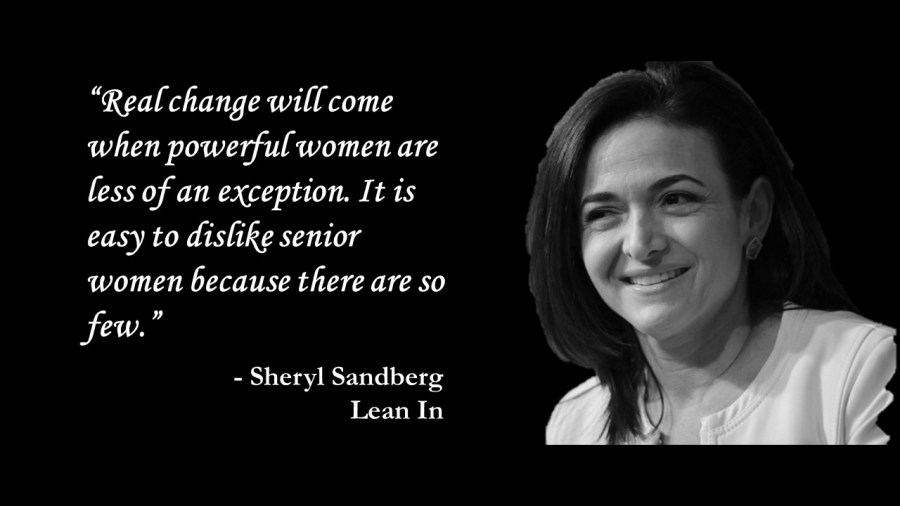
25–05–2018, Mumbai, India: Real change will come (in workplaces) when professional Muslims are less of an exception. It is easy to ignore professional Muslims because there are so few.
Good Morning Everyone. This is The Friday Post on a warm Friday morning. Muslims from across the world head towards their places of work on a partly empty stomach on the second Friday of this Ramzan. It seems a good time to understand how aspects of daily Muslim life are not incorporated in Indian workplaces and the difficulties Muslims face because of this.
Whats
It’s not just discrimination
Stories of discrimination faced by Muslims in Indian workplaces do tend to crop up once in a while. (Incident 1, Incident 2, Incident 3)While discrimination can be blatant — like being denied a job — or subtle as this essay points out, it is a morally and sometimes legally incorrect practice. What I want to talk about are elements of workplace design that make it difficult for Muslims to work while practising their religion as per their wishes. Yet, these practices are not recognised, sometimes even by Muslims themselves.
It’s not just Muslims
Back in college, we wrote a paper on workplace design and presented challenges faced by women today at workplaces because workplaces are mostly designed on principles dating back to times when the corporate world was a male-only bastion. Something as simple as the A.C. temperature could be a hidden form of sexism which we never acknowledge.
It’s not deliberate, maybe
Just as discrimination can be blatant or subtle, it can also be deliberate or accidental. This problem we are discussing here is almost entirely accidental. No one desires to create these challenges targeted at Muslims. Just as no one really wants to trouble women but the idea of keeping sanitary pads in restrooms doesn’t naturally occur to the management in most firms, problems Muslims face aren’t always by design.
Whens, Wheres, and Hows

Prayer
Practising Muslims pray five times a day and their problem starts with getting ready for prayers. They have to wash their hands, face, and feet to attain purity before prayers. Even though hands and face create no issues, washing the feet causes some troublesome and embarrassing situations. We either end up washing our feet in the stalls or end up having the famous foot-in-the-sink moment.
Of the five times we pray, three almost always will be during office hours. This creates two problems — time and space. Most offices have no provision for a prayer room. We end up having to make space for ourselves in parking lots or the mezzanines of staircases.
Timings are a bigger issue for Friday prayers and in educational institutions. Students live on a tight schedule and hence finding time to pray almost always involves having to skip classes. The same issue is faced by teachers now. This order has been welcomed by many without ever asking why can’t there be other solutions — like scheduling classes in such a way that Muslim teachers have their free periods during the prayers. Another option could have been arranging lunch break on Fridays during the prayer times.

Attire
There are two primary elements here — the beard and the hijab.

When it became apparent to my father that I was growing a beard, he warned me of discrimination I could face. Thankfully, I don’t think I have. A beard is mandatory in Islam — and Muslims can choose to observe it.
Similarly, a hijab is mandatory in Islam — and Muslims can choose to observe it too. I won’t talk about how “rational” these are. Instead, let’s just try and understand that these are not hazards at the workplace.
Although I am yet to come across incidents where the beard has been banned because of religious reasons, the hijab was banned by the EU last year for the same. The most common reasons cited include workplace etiquette, professionalism, and security. There’s also the expectation from Muslims to make concessions, assimilate, and meet “mid-way”.
It’s tough to understand how these things are in any way related to professionalism or etiquette. What is perceived as professional attire is the dress code of the majority and any deviation from it is not considered professional. As far as security is concerned, checking employees and their belongings is, or at least should be, a bare minimum practice in most corporate workspaces.
As far as the question of meeting “mid-way” comes, why should only Muslims be expected to go over to that side? The majority that fills workspaces is not expected to move an inch whereas Muslims joining in are expected to move to the “mid-way” position. This, simply, is not justified.
Food
The only concern Muslims have in this regard is that the food should be halal — allowed by Islam. To avoid the risk of being served non-halal food, many Muslims stick to eating vegetarian in workplaces and restaurants. A lot is not needed except ensuring that non-vegetarian food served is slaughtered as per Islamic law. It can be procured and prepared by anyone irrespective of religion.
Pilgrimage
My parents postponed Hajj to after my father’s retirement. So did a lot of others I know. The major reason is that we Indians want to complete all our other responsibilities before heading for pilgrimage. A lesser reason is that no employer will eagerly give you a leave of two months unless it’s for medical reasons. This is completely understood. However, Hajj is generally a once-in-a-lifetime event and giving someone a leave without pay when planned months in advance can see her or him perform a physically tough act when she or he is healthy enough to actually do it.
Whys
The biggest reason I have understood is the low participation of Muslims in higher education and corporate workplaces. Muslims are one of the most underrepresented social groups in corporate India. Just as there were hardly any women in Indian workplaces and hence most workplaces are not designed keeping their needs in mind, so is it with us. We have our own glass ceilings to get past.
The Foot-in-the-Door Generation
We are what I call the foot-in-the-door generation. We are trying to open a gate that was shut to us and hence we will face resistance. Sometimes it will be people on the other side forcing the door shut. Sometimes it will be the door shutting on us because that is what it is designed to you. We have to stick our foot in and push the door ajar for those following us.

What can be done
By the Muslims
Simply, lean in. Keep getting in these positions and speaking up for your rights. Figure out where the flaw is systemic and work towards removing it. You don’t always have to meet others “mid-way”; sometimes you just need to speak up.
As Muslims get their fair representation in corporate offices, things will change. Most airports now have separate prayer and ablution rooms. Things can change when you have a voice loud enough.
By Others
Make an effort to understand. Understanding does not involve knowing ins and outs of Islam. It just involved being open to change and ready to listen. If this can work for Sabarimala devotees, it can for others too. Some good points to understand ways to accommodate Muslims can be read here and here.
It’s also important that most of the expectations of meeting “mid-way” are not actually mid-way if one of the parties doesn’t have to walk at all. A non-Muslim expecting a Muslim man to shave is not meeting mid-way. Muslims praying in the parking lot is not meeting mid-way. What seems like normal to you are your lifestyle choices. Expecting others to adjust to them is not “meeting mid-way”.
Why should this be done
There is merit in diversity. Not only does it bring new ideas and perspective to the table, it also helps undo social wrongs. In the atmosphere of mistrust, taking steps to understand each other can go a long way in fostering peace. I will keep trying from my end; you can from yours. Till then, live long and prosper.
The post was also published here.
 A LAYMAN PERSPECTIVE
This is excellent! A much needed twist to Sheryl Sandberg’s ‘Lean In’!