
15–06–2018, Mumbai, India: How can you unite a religion that has 73 sects of people?

Good Morning everyone. This is The Friday Post on a warm Friday Morning. Indian Muslims had a strange start to Ramadan this year and they will be having a strange Eid as well. This is because the two major groups of Sunni Muslims in India — the Deobandis and the Barelvis — for the first time, perhaps, disagreed on the sighting of the moon.
What happened this year
The Islamic Method of Sighting the Moon
Islam follows a lunar calendar where the start of each month is marked by the sighting of the first crescent moon after a new moon night. There are twelve months in a year and Ramzan is the month when Muslims fast. For the start of each month, Muslims try and observe the first crescent after the new moon and this achieves more significance in Ramzan.

This year, there were chances that the crescent of Ramzan will be sighted on the 16th of May. If not, then the moon would definitely be sighted on the 17th. (That is how the moon works, apparently.) Generally, a crescent is visible in the first one or two hours after sunset. People of known piety — not known to lie, miss prayers, etc — have to confirm having sighted the moon. Once a confirmation is achieved, Muslims all over the area begin to fast. A similar procedure is adopted for Eid as well. Eid is the first day of the month of Shawwal — the month that follows Ramzan.
The case with India
Apart from a few groups in South India, most groups in India have been united in beginning Ramzan and celebrating Eid on the same day. This is because of coordination between various groups of Muslim theology. All of them coordinate with the Jama Mosque in Delhi and confirmation of moon-sighting is done with consensus. This ensures a harmonious celebration of the festival across the country and removes all confusion. Muslims irrespective of their affiliation to a school of thought get together and celebrate Eid.

What happened this year
On the 16th, there were no reports of moon-sighting from anywhere right up till around eight in the night. Then reports were heard from the Ahl-e-Hadees group of the moon being sighted. This group is generally at loggerheads with the larger subcontinent group — the Barelwis for their opposition. Their announcement was later ratified by the Jama Masjid and accepted by the other major Sunni group in India — the Deobandis. The Barelwis, however, did not trust this report and decided not to start fasting from the next day. Hence, one group started fasting from the 17th whereas the other waited until the 18th for the same.
Needless to say, this was an unfortunate turn of events.
Divisions in Islam and differences of opinion date back to the first century of Islam. Let us in brief try and understand the major sects that have formed within Islam.
Divisions in Islam
Please note that this is not a comprehensive treatise on the sects within Islam. For anyone who wants a basic overview, please refer to the annual editions of The Muslim 500 published by Royal Islamic Strategic Studies Centre. This annual publication has a section on the House of Islam which does a very good job of summarising the schisms in Islam very well.
The Shias and The Sunnis
The first known division was immediately after the Prophet’s time (sallallaahu alaihi wa sallam). Abu Bakr (raDhi Allaahu anhu) became the first caliph followed Umar (raDhi Allaahu anhu) and Uthman (raDhi Allaahu anhu). Ali (raDhi Allaahu anhu) became the fourth caliph. However, there were many who held that he should have been the first caliph instead of Abu Bakr. These became the Shia and the others who stood by followed order became the Sunnis. Both groups, obviously, call the other misguided and worse.
Divisions within the Sunnis
The Sunnis have further seen divisions themselves along the lines of creed and jurisprudence. These are out of scope for the current division here. However, I will introduce them here to explain the difference between the subcontinent groups I am talking about — the Deobandis and the Barelwis.
Along the lines of creed or theology, there are two major schools in Sunni Islam — Ashari and Maturidi. Along the lines of jurisprudence, there are four major schools — Hanafi, Shafi, Maliki, and Hanbali. The Sunni orthodoxy is united on these differences in the schools and hold each other with respect.
The Muslims of the subcontinent are largely Sunni Hanafis. Hanafis generally follow the Maturidi school of theology and creed. There are a few groups of Shafis in South India who are mostly Asharis.
The Salafis — and groups like Ahl e Hadees
The Salafis are a group gaining ground among the Muslims across the world. Their numbers are very large in Saudi Arabia, the home of the Prophet. They trace back their thoughts to a scholar, Ibn Taymiyyah. He was an influence on many modern thinkers as well and the current ruling dispensation in Saudi Arabia hold him in high regard. They call themselves Salafis but are also referred to as Wahabis — named after Muhammad ibn Abdul Wahab who was instrumental in spreading this though. Groups like Ahl e Hadees are also influenced by this ideology.
Divisions among Indian Muslims
I will only be referring here to the Hanafi Sunnis — largely from North India.
The Deobandis and The Barelwis
This is a very short summary of the split between the subcontinent’s Sunnis. I plan to write about this in depth some other day. As of now, let’s just understand this topic in brief.
Madrasa Darul Uloom Deoband is a major seminary for Muslims in India. Around the start of the twentieth century, there were some scholars affiliated to the madrasa whose views were opposed by another Indian Scholar, Ahmad Raza Khan of Bareilly. The differences were largely around practices of Indian Muslims that the scholars from Deoband opposed. Ahmad Raza Khan, seen as a reviver and an Imam later on by his followers, understood these to be inspired by the Salafi thought and against the belief of Islam.
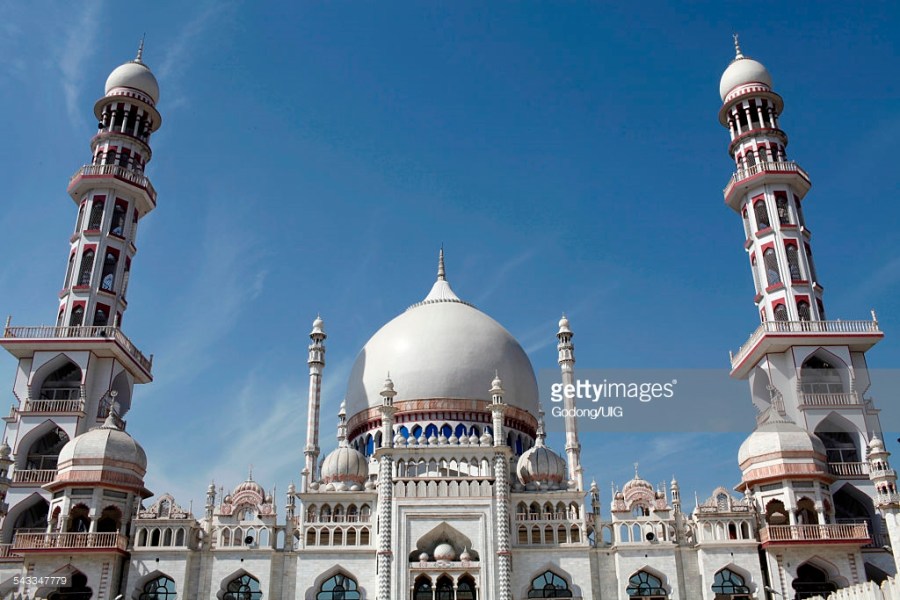
This became the basis of difference. North Indians started following one school of thought or the other — Deobandi or Barelwi. South Indians too, with time, grew closer to one school or the other. Still, there are neutral groups — Jamia Nizamia of Hyderabad is a good example.
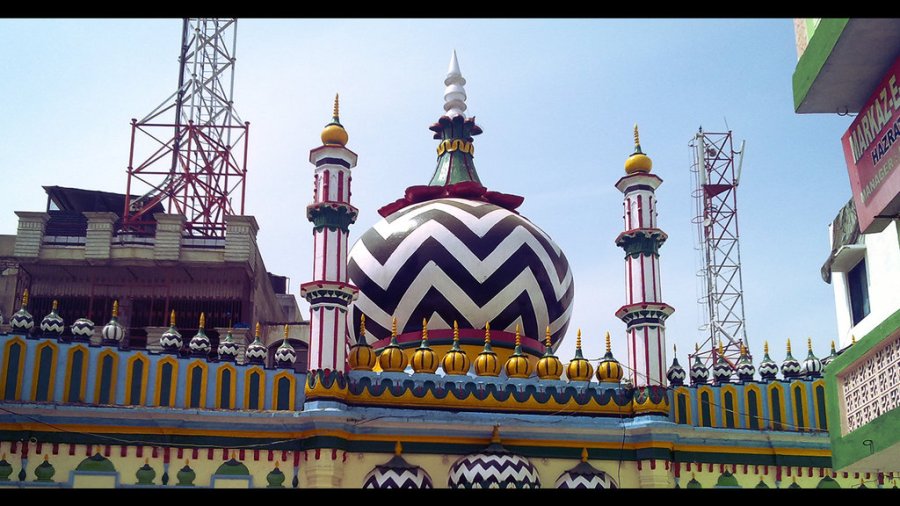
The Moon Controversy
As explained earlier, both the groups have been unified on the sighting of the moon and have come to a consensus so far. I don’t remember any year where this did not happen except the current one. The Barelwis not accepting the reports led to Deobandis starting Ramzan from 17th of May and Barelwis starting Ramzan from 18th. This can create issues with Eid as well. The Deobandis will celebrate Eid either on the 15th of June or the 16th while the Barelwis will celebrate either on the 16th or the 17th.
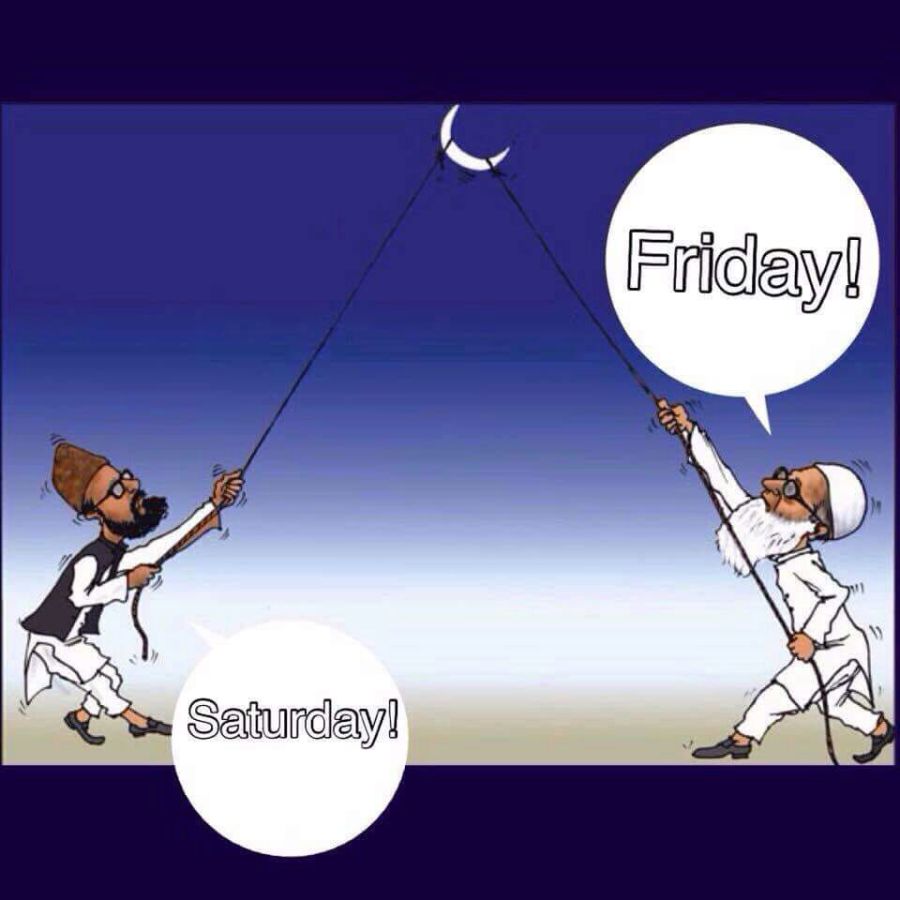
This will lead to a lot of discord and disharmony; neighbours will end up celebrating Eid on different days. All we can hope for is for things to get better and people to live in peace and harmony. With the intense focus on Islam the world over and India, we Muslims need to find ways to be together. I don’t know if this is possible. I don’t know if this will happen. Till then, live long and prosper.
This post has also been published here.
 A LAYMAN PERSPECTIVE
This is a good confusion. Everyone gets Double the Biriyani.
I was pretty sure political prudence will take precedence over ideology. Jama Masjid announced that Eid will be on Saturday. From the looks of it, both groups will accept this. If you’re in Kolkata, you’re welcome. Mutton biryani is on.